How to pick a pumpkin that lasts, carve it like a pro, keep it from melting in a Texas October — and get the porch, the mums and the pansies right while you're at it.
Step 1
Look for a deep, even color and a shell that's hard all the way around — press a fingernail into it and it shouldn't leave a dent. Soft spots, cuts and bruises are where rot starts. A green, firmly attached stem means it was picked recently; never carry a pumpkin by the stem, though, because a snapped stem opens the door to decay.
Set it on the ground before you buy it. A flat, stable bottom saves you a wobbly jack-o-lantern later. For carving, pick a size with smooth, wide faces and thinner walls (bigger jack-o-lantern types); pie pumpkins and specialty varieties are denser and better for cooking or decorating whole.
Step 2
Wash the outside with cool soapy water first, and clean your tools. Cut the lid at an angle so it can't fall in, or cut a hole in the bottom instead — it hides the opening and makes the pumpkin sit over a light. Scrape the inside walls to about an inch thick where you'll carve; thinner walls glow brighter and cut easier.
Tape a paper stencil on and poke the outline with a pin, then cut the small details first and the big pieces last so the pumpkin stays strong while you work. Push the cut pieces out from the inside. Try our Carve-a-Pumpkin game to test a design before you commit.
Step 3 · The Texas part
A pumpkin is about 92% water, and an 85-degree afternoon on a west-facing porch will wilt a carved one in two or three days. The fixes, in order of how much they help:
Bonus
Rinse the seeds, pat them dry, toss with a little oil and salt, and roast on a sheet pan at 350° for 20–30 minutes, stirring once, until golden. Cinnamon-sugar or chili-lime both work. The flesh of a pie pumpkin roasts the same way for soup or pie.
The nursery side of fall
Buy mums with plenty of buds just showing color rather than in full bloom — they'll give you three to four more weeks of show. Mums drink a lot: in a pot in the sun, water whenever the top inch of soil is dry, often daily in warm weather. Give them at least six hours of sun and pinch off spent flowers to keep new ones coming. Plant them in the ground after they finish and many will come back next fall.
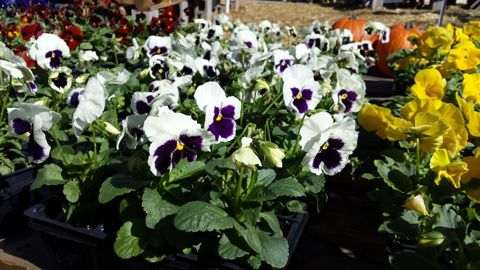
October is pansy month in North Texas. Plant once soil temperatures have dropped into the 45–70° range so roots establish before winter — that's typically mid-October on. Full sun, 6–10 inches apart, in well-drained soil with a slow-release fertilizer. Water daily the first week, then a couple of times a week. They shrug off our freezes (throw a sheet over them on the coldest nights), bloom all winter and put on their biggest show in early spring.
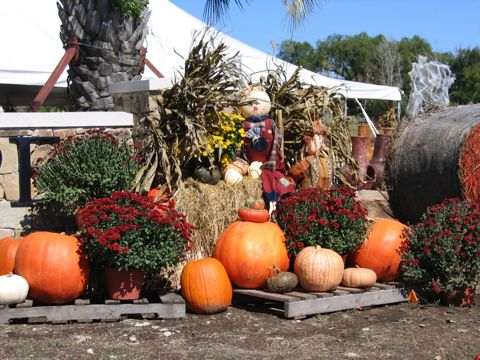
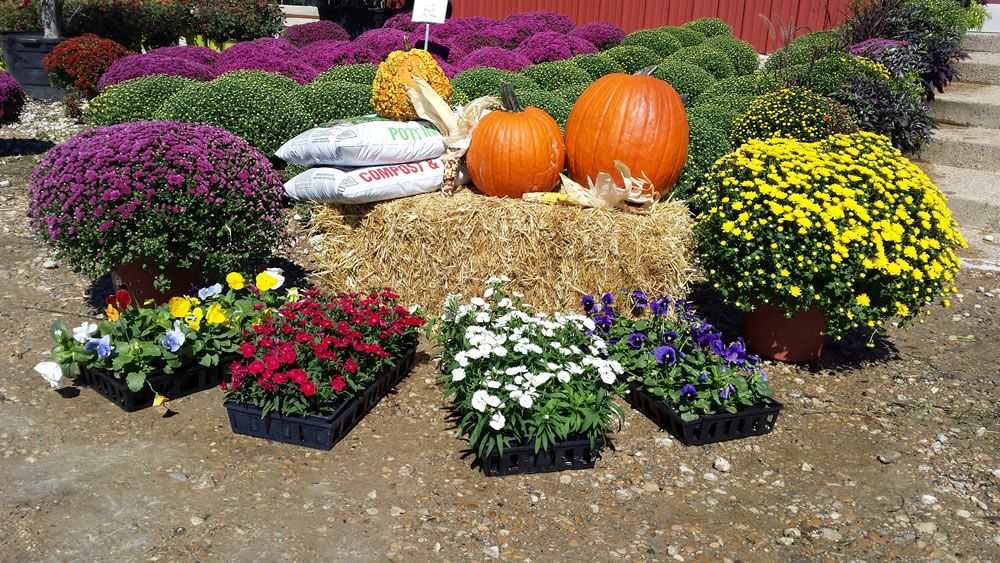
Start with height: a corn stalk bundle tied to a porch post or lamp post. Add mass with one or two straw bales, then stack pumpkins of three sizes on and around them, biggest at the bottom. Tuck in a mum on each side and a few gourds and minis along the steps. Odd numbers look natural; keep everything within a two-color palette plus green. When the season's over, the straw goes into the garden as mulch.
Best planting month of the year
Fall is the best time to plant trees and shrubs in North Texas: roots keep growing all winter in our mild soil, so a tree planted in October is established before its first summer. The nursery is right behind the patch, and our Plant Finder can help you pick one.
Did you know?
Sources: Guinness World Records / UPI (Oct 2025 record); Texas A&M AgriLife Extension and Texas Department of Agriculture reporting on Floydada; University of California; Virginia Tech and Utah State University Extension (pumpkin preservation); Texas A&M AgriLife Extension, Williamson County (pansies).